
Notes from building systems that hold up
Deepak Kumar Jha on Node.js at scale, architecture decisions, AI in production and leading engineering delivery — written from the work, for the people who have to make the call.
All articles
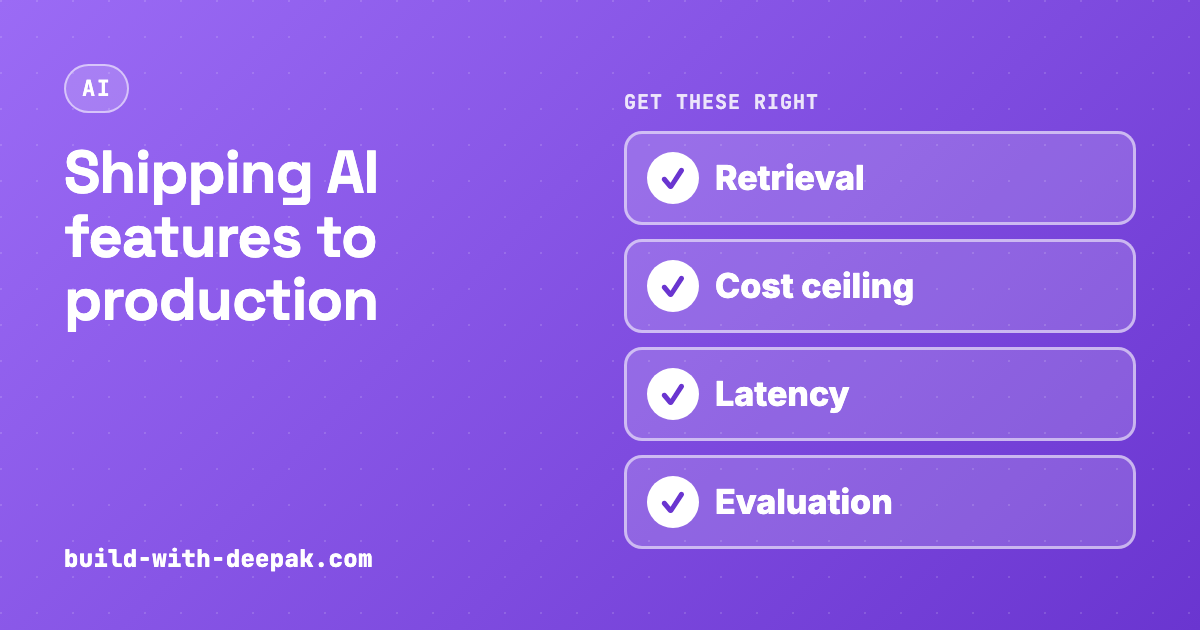
Shipping AI Features to Production: The Backend Nobody Talks About
The demo took an afternoon. The feature took a quarter.
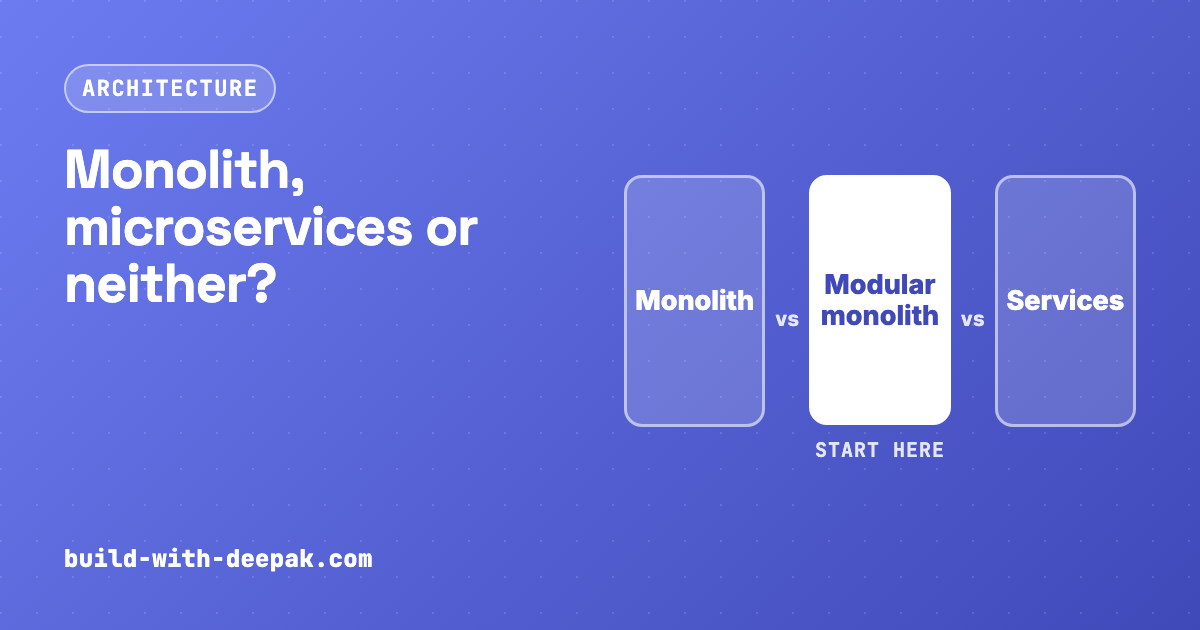
Monolith, Microservices, or Neither: An Honest Architecture Guide
I have talked more founders *out* of a microservices migration than into one.
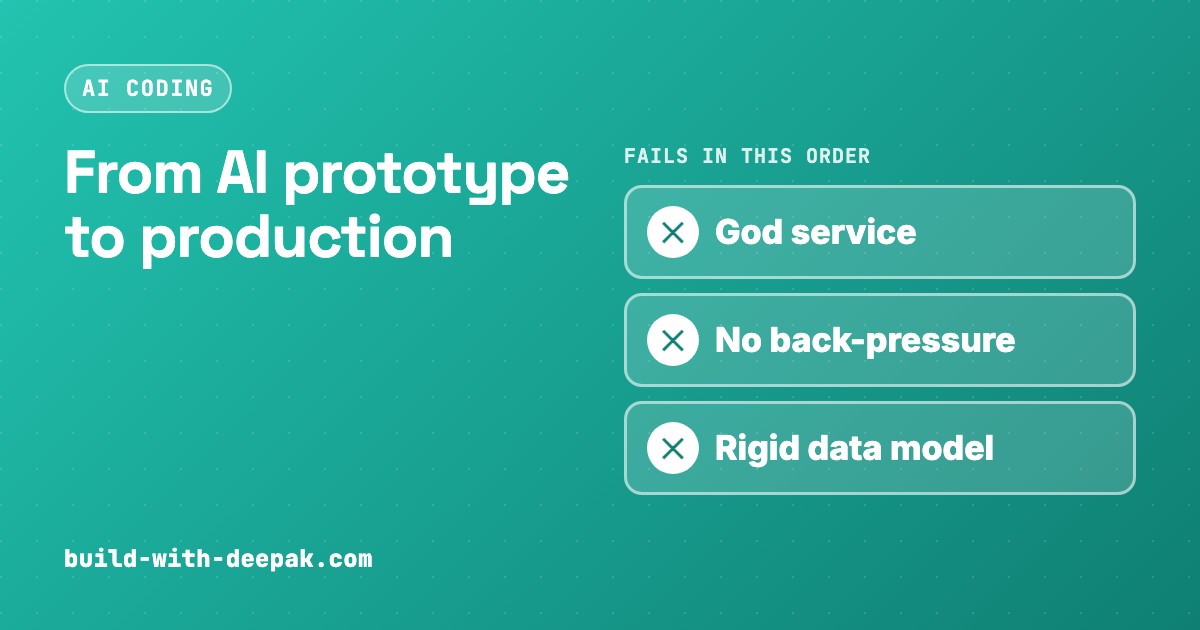
From AI Prototype to Production: The Engineering Guide
Six months ago a founder sent me a link to their product. Padel club management, B2B, pre-seed about to close. It worked. You could sign up, create a club, book a court, take a payment. They had built it in about three weeks without an engineer.
Backend Architecture
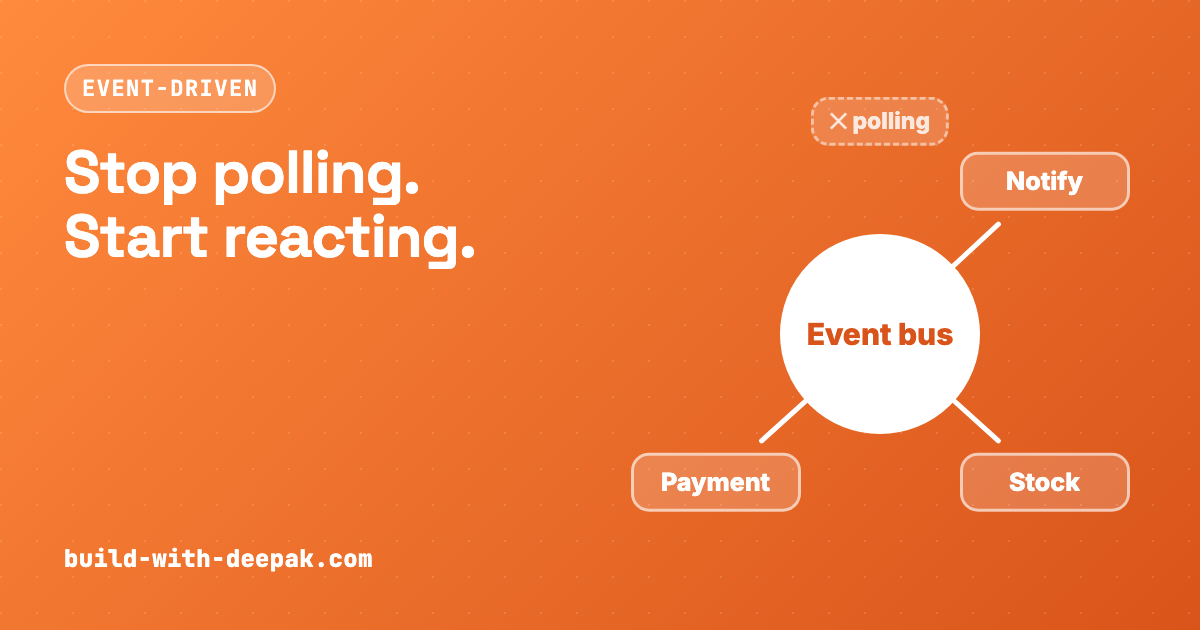
Stop Polling, Start Reacting: Why Event-Driven Architecture Is Your Competitive Advantage
There's a pattern I see in almost every backend I'm asked to review: polling. The order service checks the payment service every 5 seconds: "Has the payment been confirmed?" The notification service queries the database every 10 seconds: "Are there new events?" The analytics dashboard refreshes every 30 seconds: "Is there new data?"
Backend Architecture
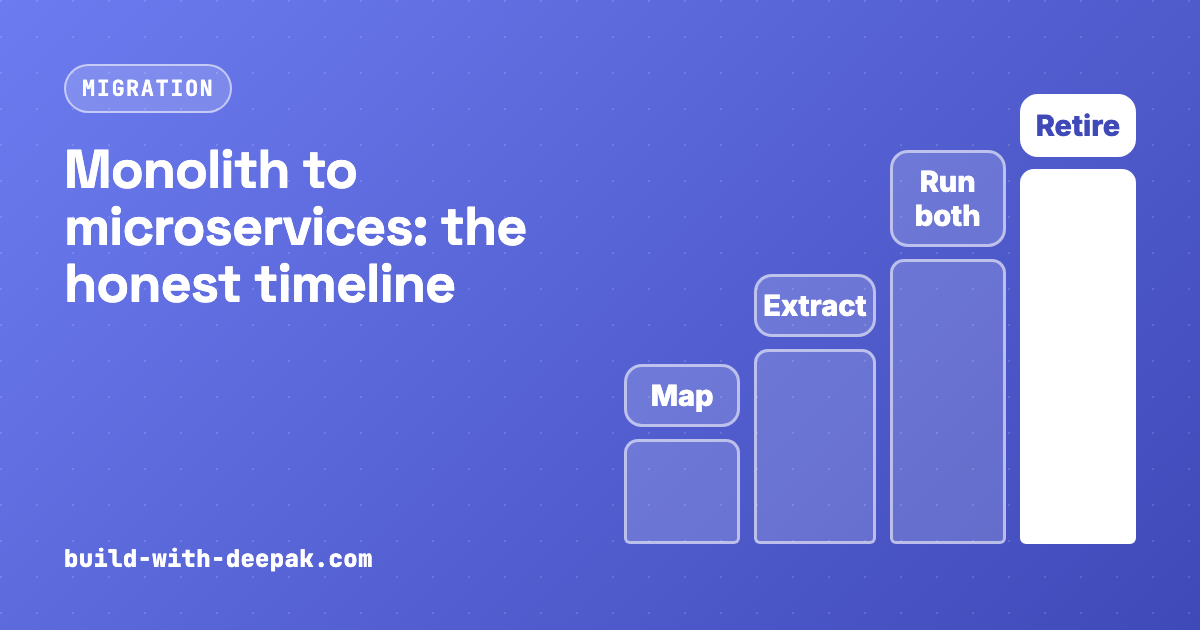
Monolith to Microservices: The Honest Timeline, Budget, and Risk Nobody Talks About
A CTO once asked me: "How long will it take to move our monolith to microservices?"
AI & Intelligent Systems
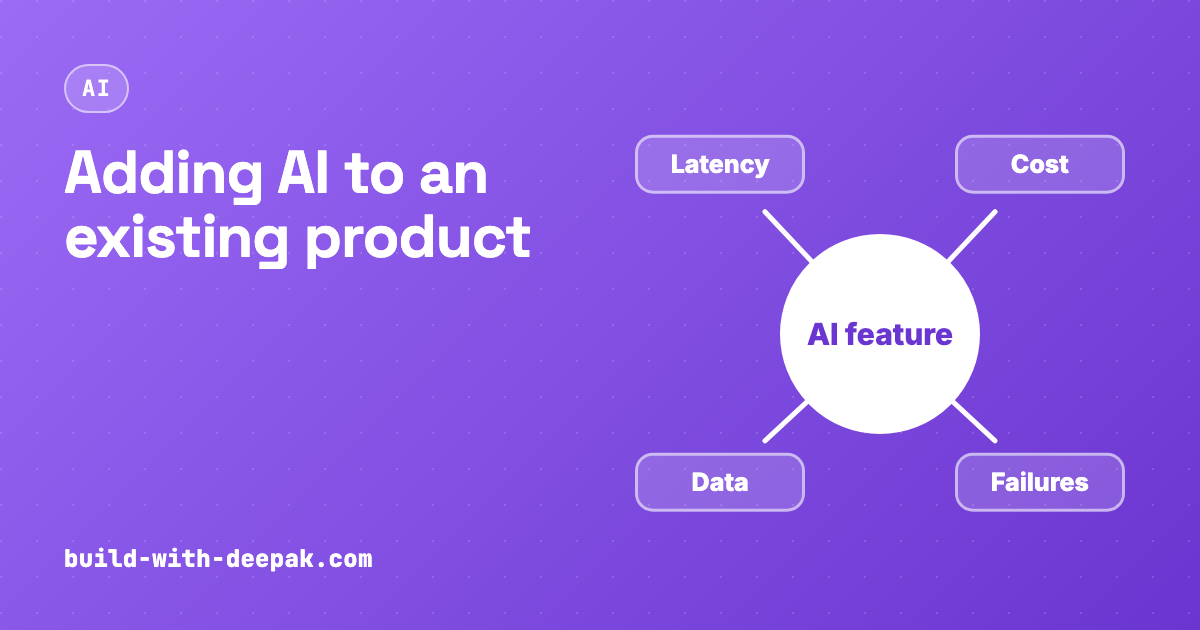
Adding AI to Your Existing Product? Here's the Backend Infrastructure Nobody Talks About.
A product manager recently told me: "We added GPT to our platform in a hackathon over the weekend. It worked great. Then we tried to ship it to our 40,000 users and everything fell apart."
AI & Intelligent Systems
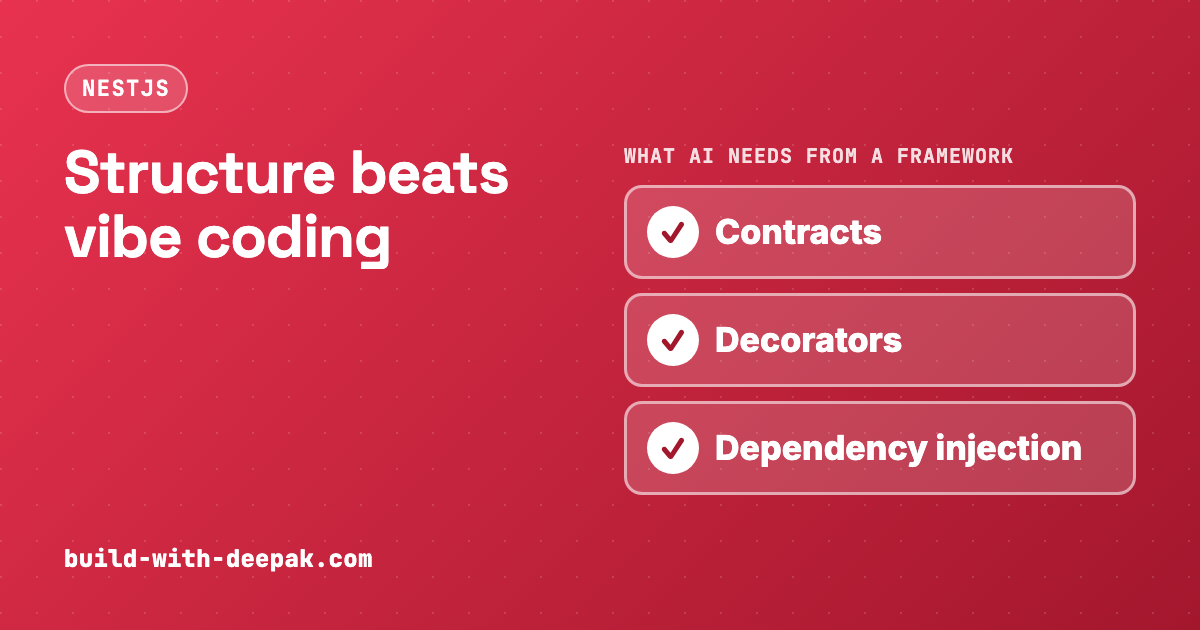
Scaling AI-Driven Engineering: Why Unstructured Frameworks Are Costing Your Team 30% in Velocity
We have entered the era of "Vibe Coding." A founder recently showed me a prototype his team built in a weekend using Cursor and Copilot. It worked. It looked great. But when I opened the codebase, it was a crime scene.
AI & Intelligent Systems
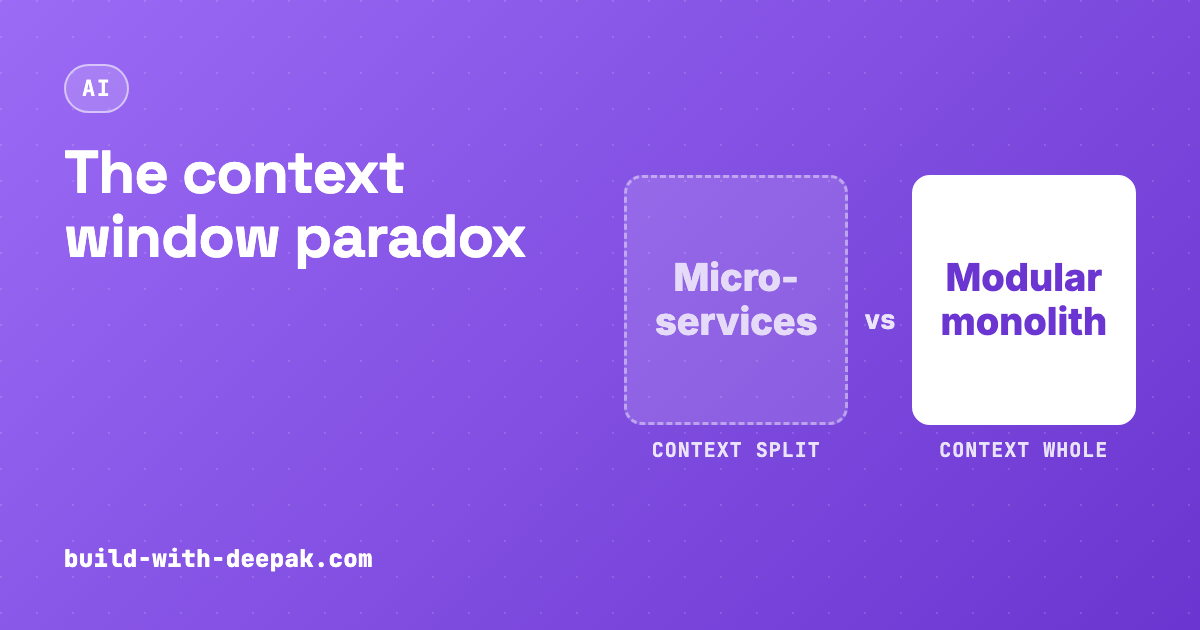
The 'Context Window' Paradox: Why Fragmented Microservices Are Sabotaging Your AI Strategy
For the last ten years, the software industry has been obsessed with "decomposition." We took perfectly functional applications and smashed them into 20 different microservices, spread across 20 different repositories. We called it "scaling." In reality, for 90% of companies, it was just "fragmentation."
Performance & Infrastructure
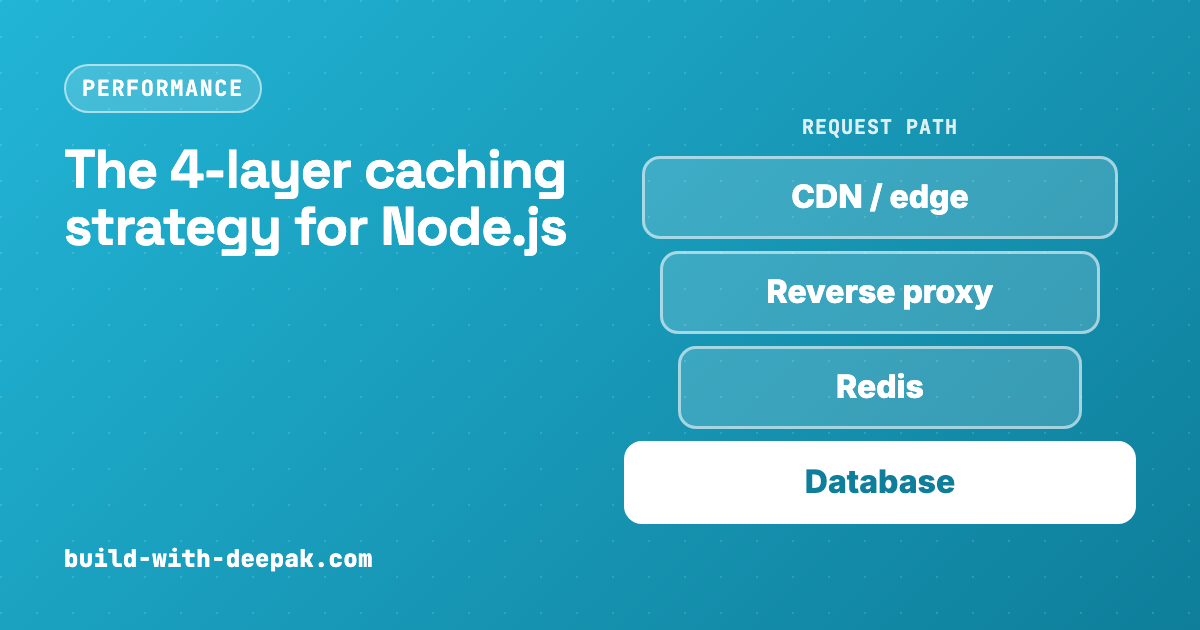
Your Node.js Backend Is Slow. Here's the 4-Layer Caching Strategy I Used to Handle 600K Concurrent Users.
Every few weeks, a founder or CTO reaches out to me with the same problem: "Our backend was fast when we launched. Now it's painfully slow, our cloud bill is climbing, and my team keeps saying we need to 'rewrite everything.'"
Leadership & Remote Work
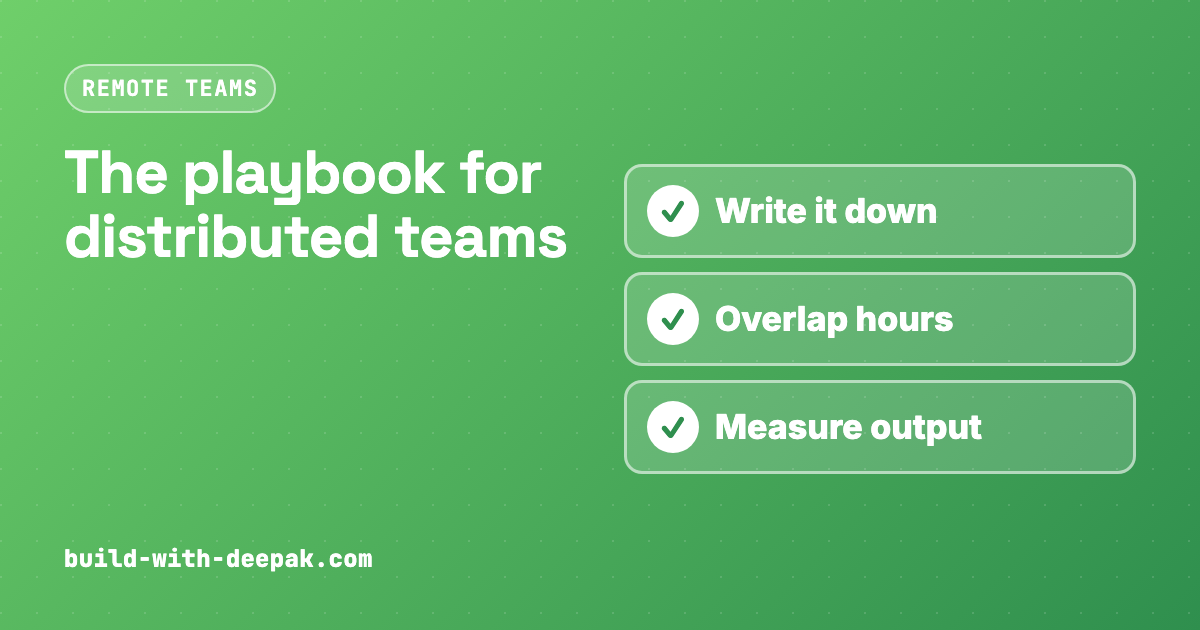
Beyond Time Zones: The Engineering Playbook for High-Performance Distributed Teams
For decades, the prevailing wisdom in corporate leadership was simple: to build a world-class engineering team, everyone needed to be within shouting distance of each other in an open-plan office. Proximity was seen as a proxy for productivity.
Performance & Infrastructure
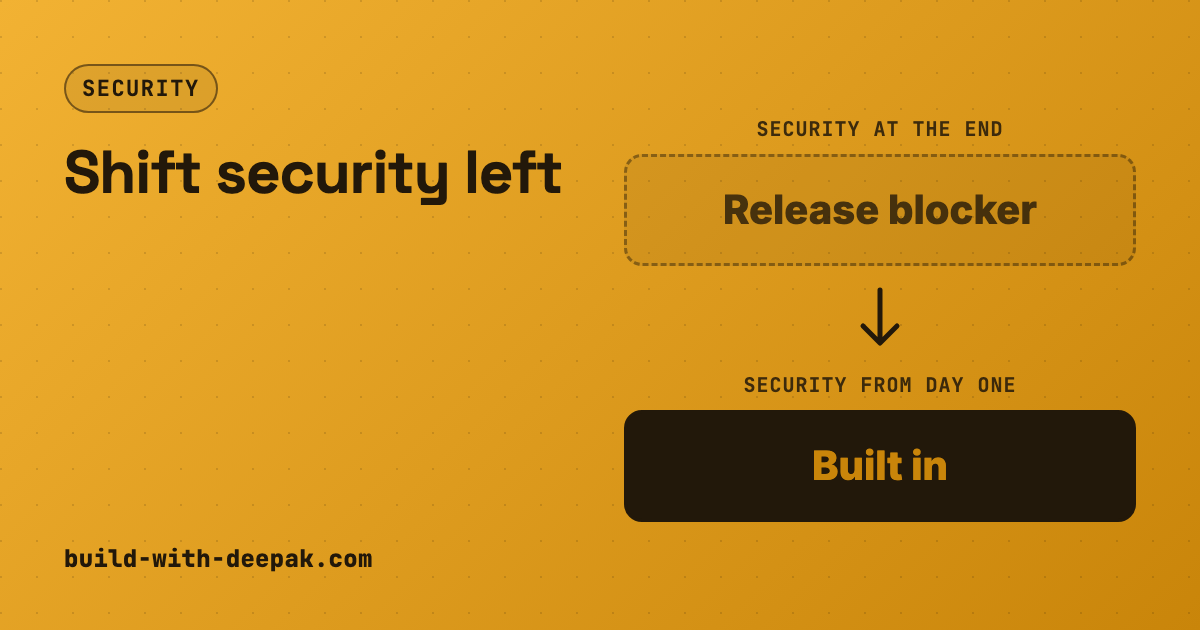
Stop Treating Security as a Bottleneck: The "Shift Left" Approach to High-Velocity Engineering
In many traditional organizations, software development follows a predictable, frustrating pattern. The engineering team sprints for two weeks, building complex features to meet a tight deadline. By Friday afternoon, the code is ready. The deployment pipeline is green.
Leadership & Remote Work
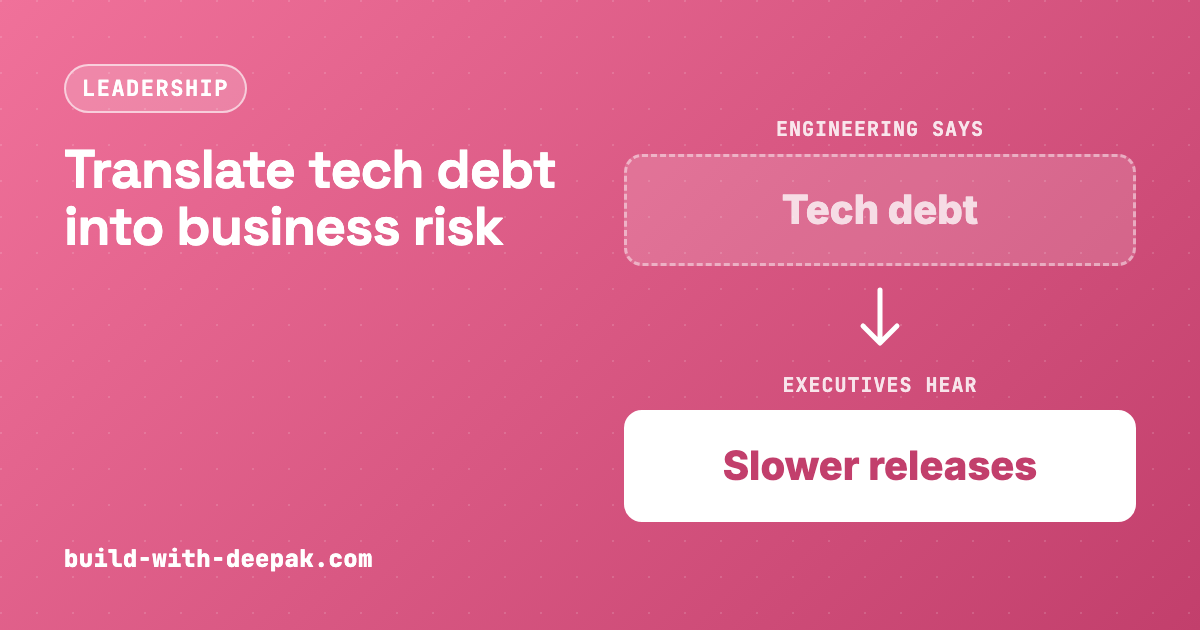
The Tech Lead's Hardest Job: Translating "Technical Debt" into "Business Risk" for Executives
As engineering leaders, we live in a world of code quality, latency metrics, and architectural purity. Our stakeholders — CEOs, Product Directors, and Investors — live in a world of revenue, customer acquisition cost, and time-to-market.
AI & Intelligent Systems
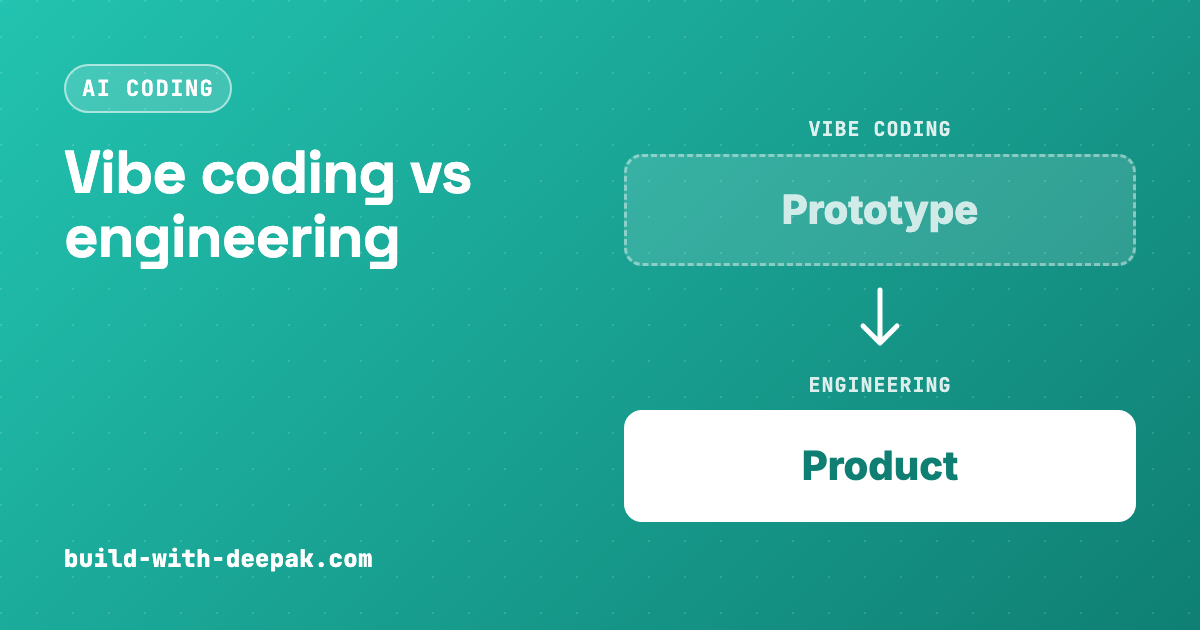
Vibe Coding Gets You the Prototype. Engineering Gets You the Product.
We are currently living through the "Vibe Coding" era. It's a term recently popularized in tech circles (shoutout to Andrej Karpathy) to describe the new workflow: you tell an LLM what you want in plain English — you describe the vibe of the functionality — and the AI spits out working code.
Backend Architecture
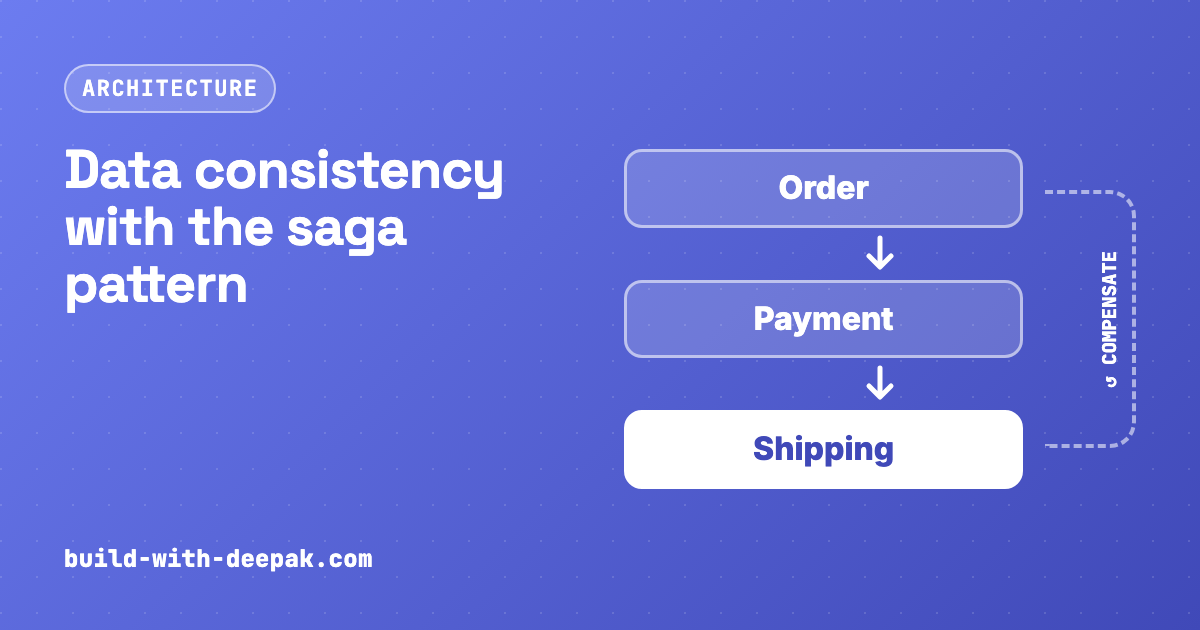
The Microservices Trap: Maintaining Data Consistency When Transactions Span Multiple Services
Breaking a monolithic application into microservices is the easy part. The hard part — the part that keeps engineering leaders awake at night — is ensuring that data remains consistent across those services when things go wrong.
AI & Intelligent Systems
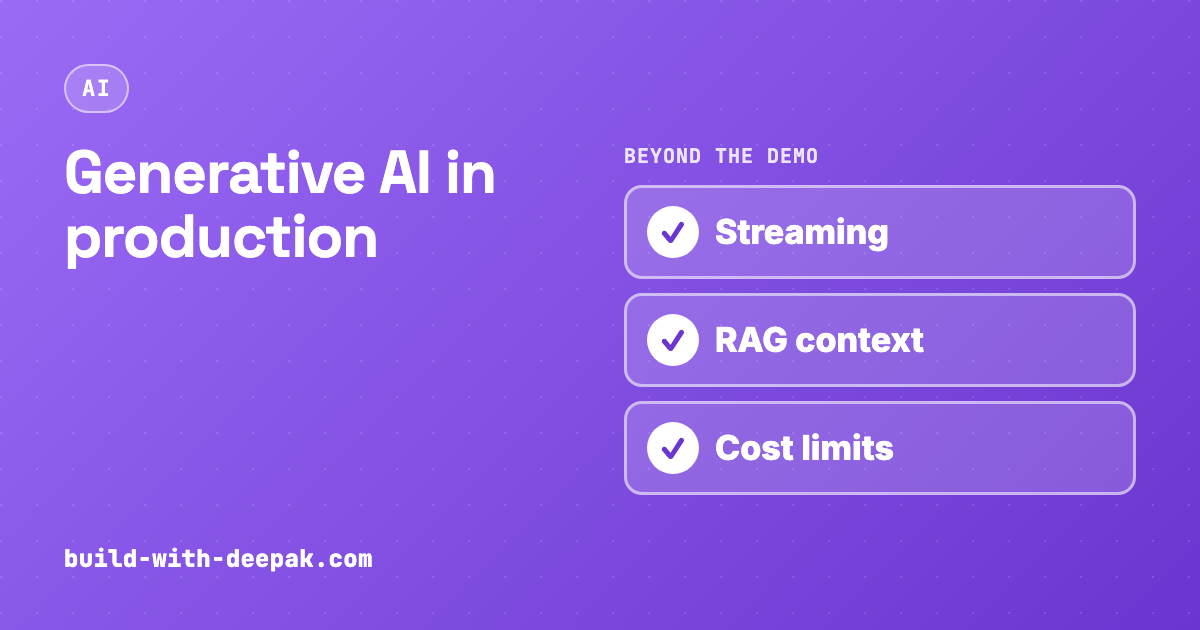
Beyond the Hype: The Engineering Reality of Running Generative AI in Production
In boardrooms around the world, the directive is the same: "We need GenAI in our product by next quarter."
Backend Architecture
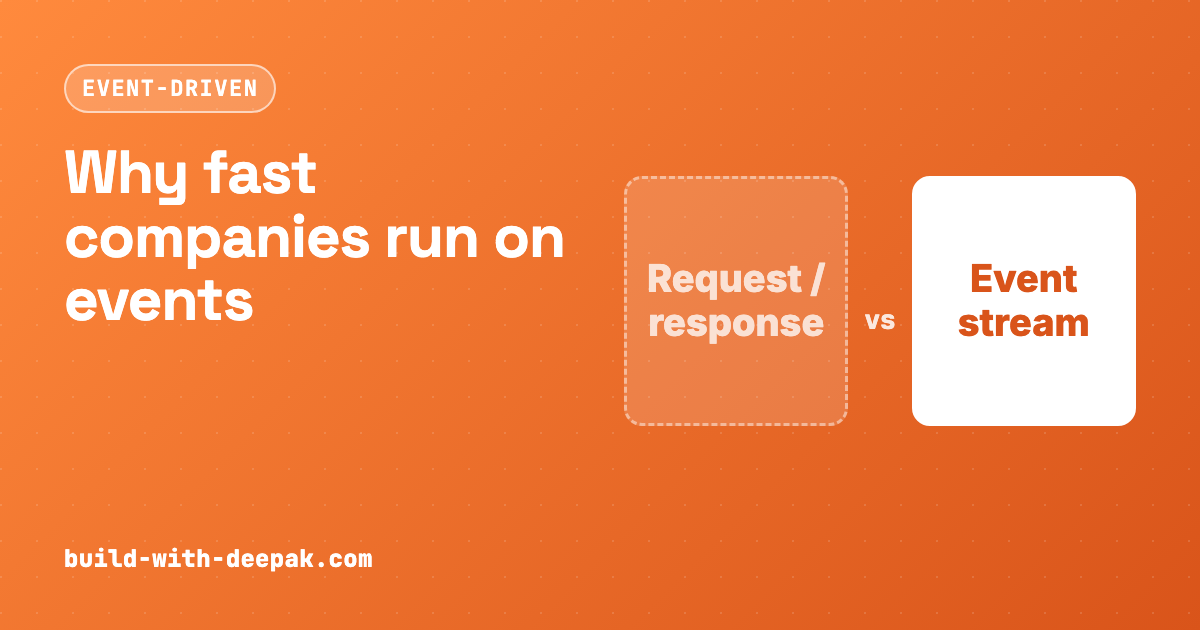
Stop Polling, Start Reacting: Why Fastest Companies Run on Event-Driven Architecture
For years, we built systems using REST APIs. Service A needs data? It asks Service B. Service B asks the database. It works, but it's brittle. It creates tight coupling. Most importantly, it's slow.
Backend Architecture
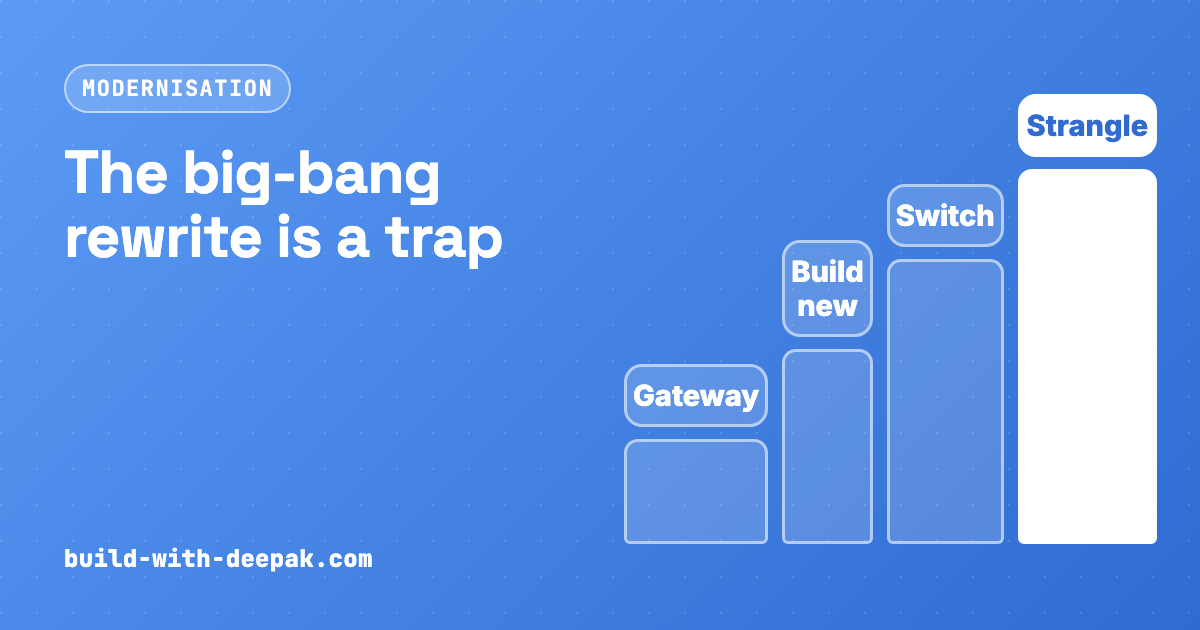
The "Big Bang" Rewrite is a Trap: A Risk-Free Strategy for Legacy Modernization
Every successful software product eventually reaches a tipping point. The codebase that allowed you to launch fast five years ago is now the very thing slowing you down. Deployment times creep from minutes to hours. A small bug fix in the billing module breaks the user profile page. New developers spend weeks just trying to understand the code before they can write a single working line.
Performance & Infrastructure
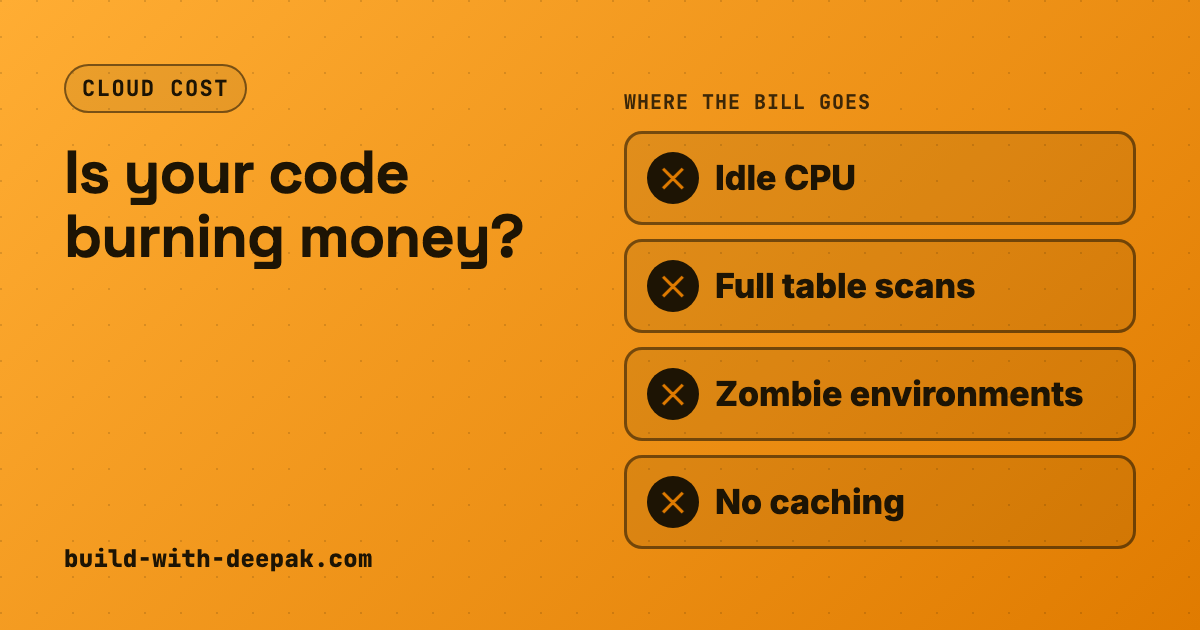
Is Your Code Burning Money? How to Cut Cloud Costs by 40% Without Touching Your Features
One of the most painful growing pains for any successful digital platform is the "Cloud Bill Shock." You scale from 1,000 to 100,000 users, and suddenly your AWS or Google Cloud invoice skyrockets — often faster than your revenue.
Backend Architecture
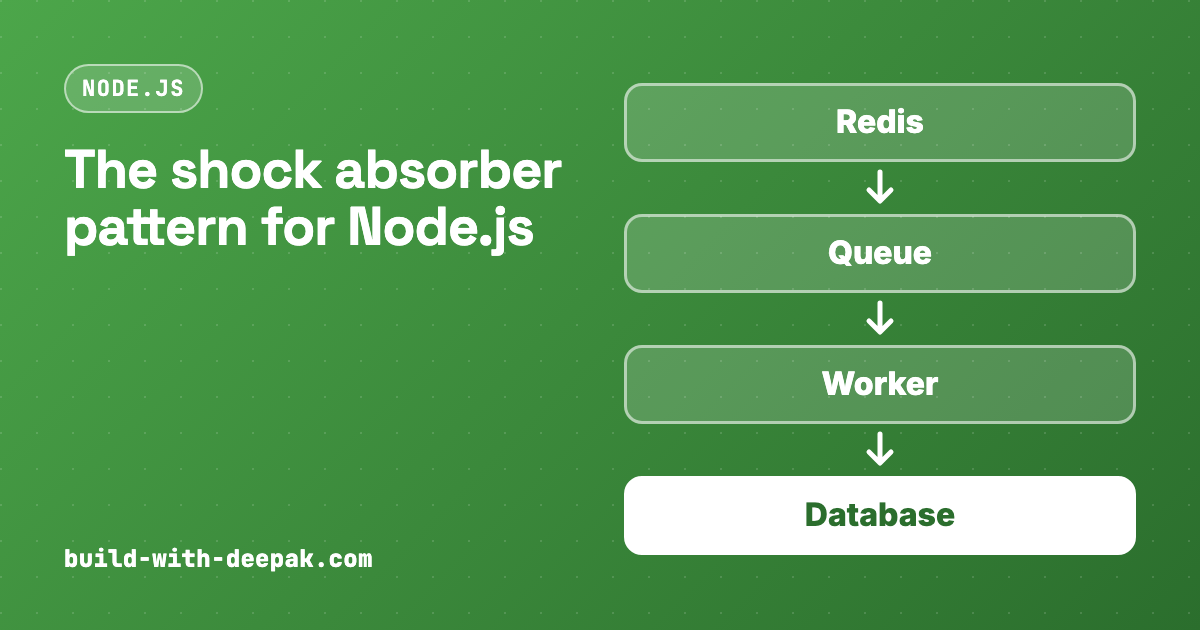
Handling High Concurrency in Node.js: The "Shock Absorber" Pattern
In high-demand environments — whether a flash sale, a ticket launch, or a fintech transaction window — standard REST API architectures often fail not because of code inefficiency, but because of database constraints.
Frontend & Frameworks
React vs Angular in 2025: Which Framework to Choose?
An in-depth comparison of the two leading frontend frameworks, helping you make the right choice for your next project.

Frontend & Frameworks
Mobile App Design Trends Dominating 2025
Explore the latest design trends transforming mobile user experiences, from glassmorphism to AI-driven personalization.
Performance & Infrastructure
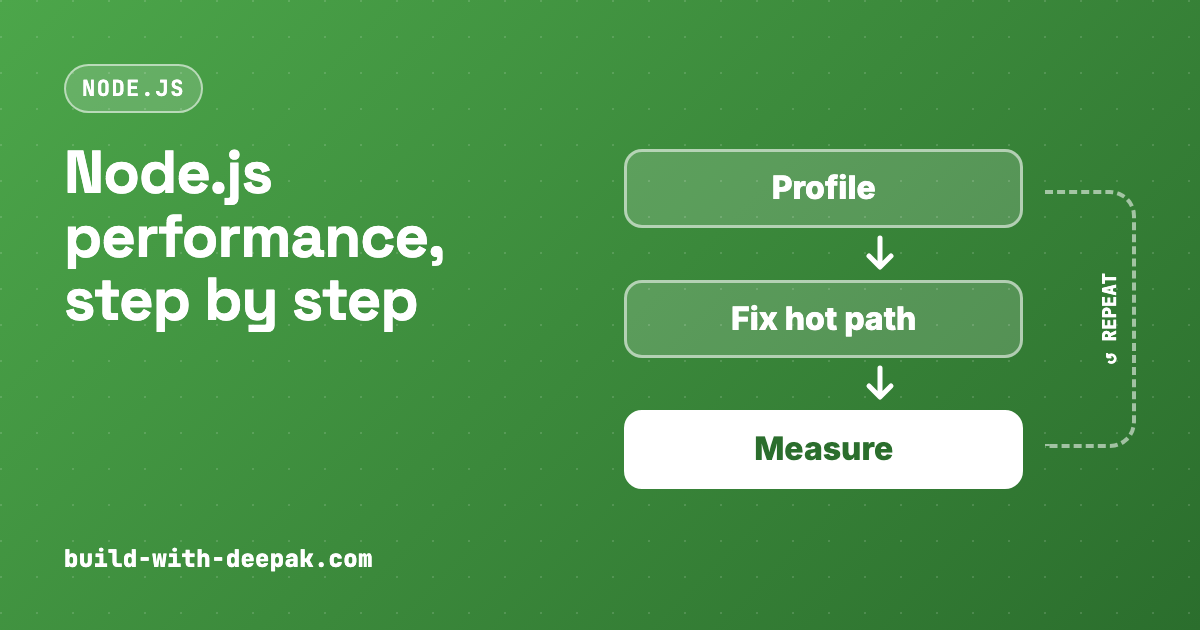
Node.js Performance Optimization: Best Practices
Learn proven techniques to optimize your Node.js applications for speed, efficiency, and scalability.
Frontend & Frameworks
Flutter vs React Native: 2025 Performance Benchmark
Real-world performance testing reveals which cross-platform framework delivers the best user experience.
AI & Intelligent Systems
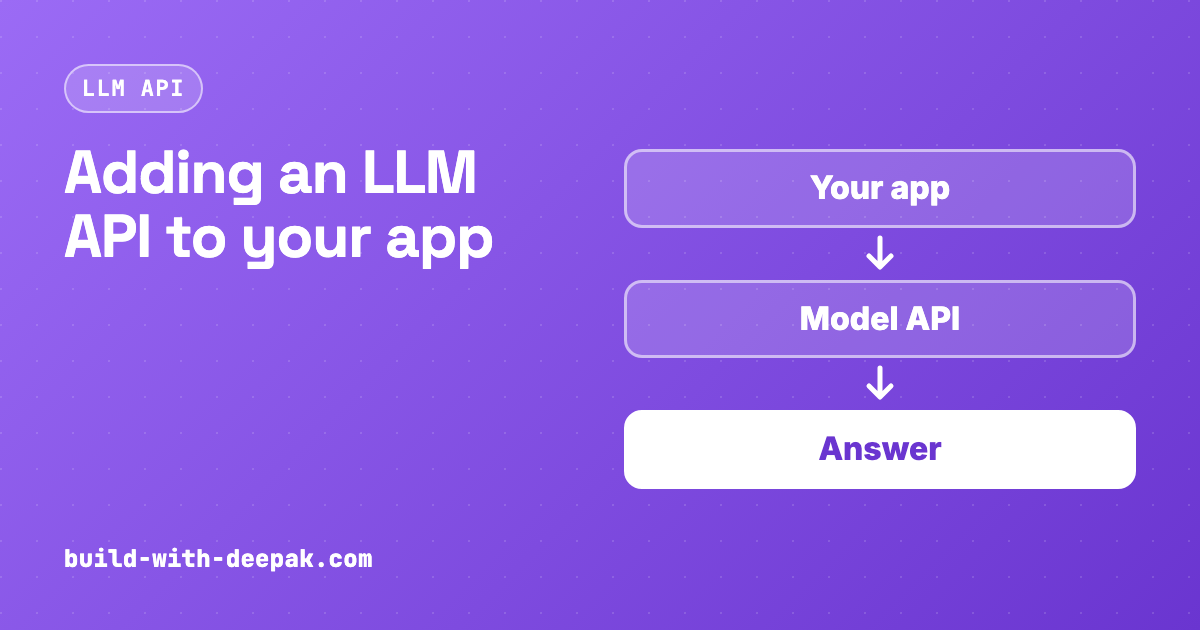
Implementing ChatGPT API in Your Application
Step-by-step guide to integrating OpenAI's ChatGPT API, complete with code examples and best practices.
Backend Architecture
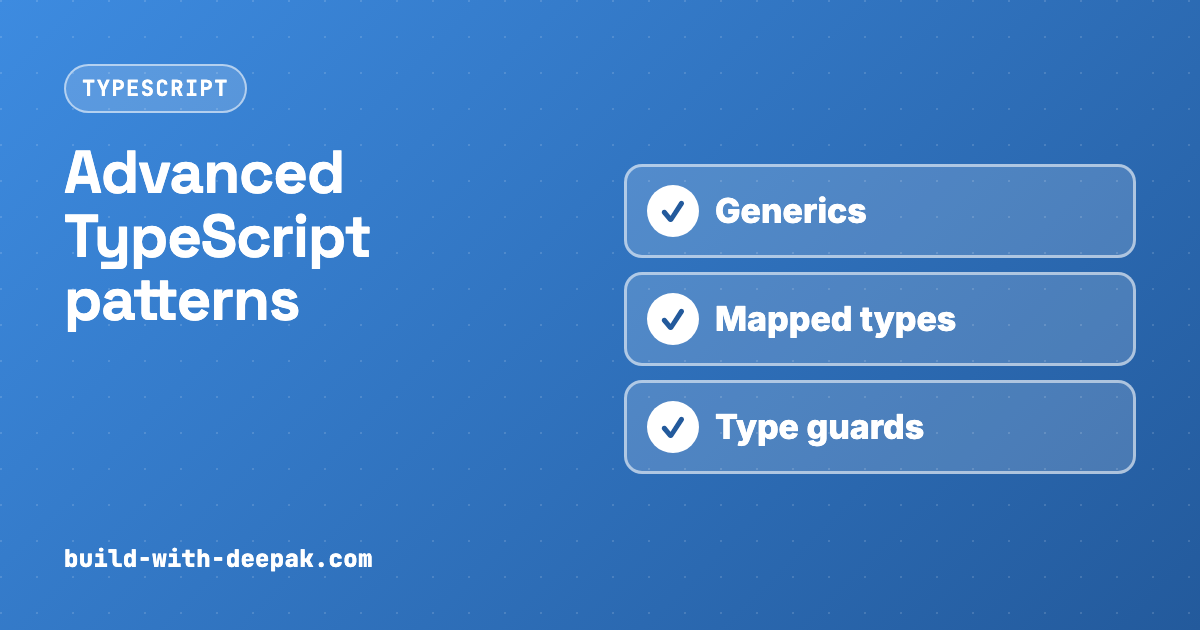
TypeScript Advanced Patterns You Should Know
Master advanced TypeScript patterns including generics, conditional types, and mapped types for bulletproof code.
Product & Services
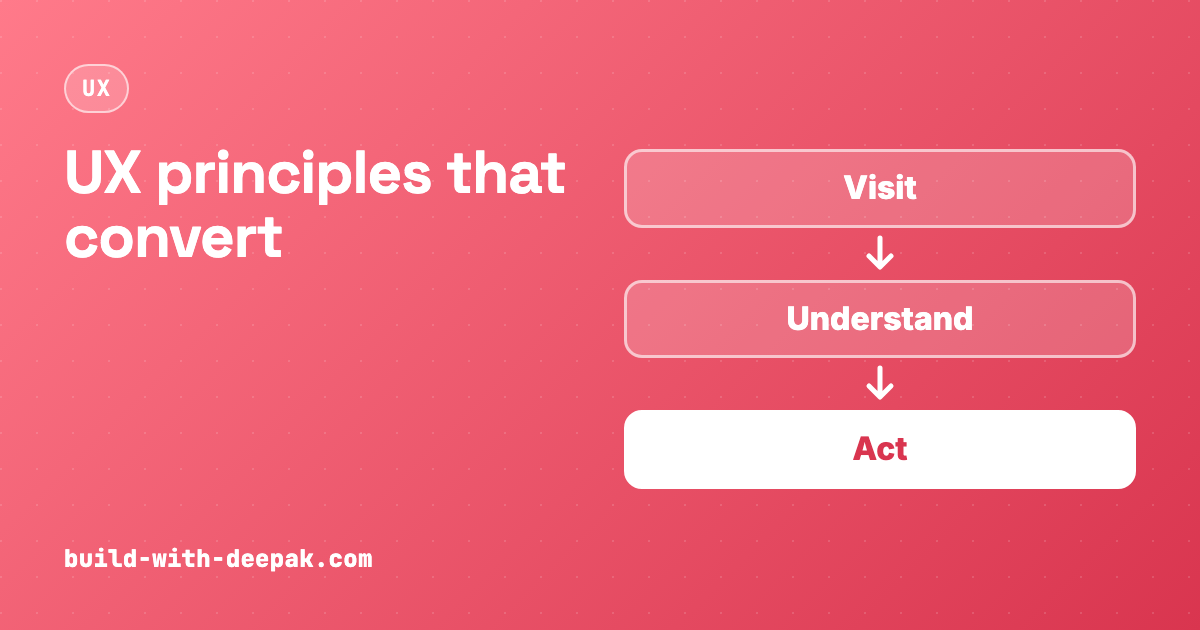
UI/UX Principles That Actually Convert Users
Data-backed design principles that have been proven to increase conversion rates across thousands of websites.
AI & Intelligent Systems
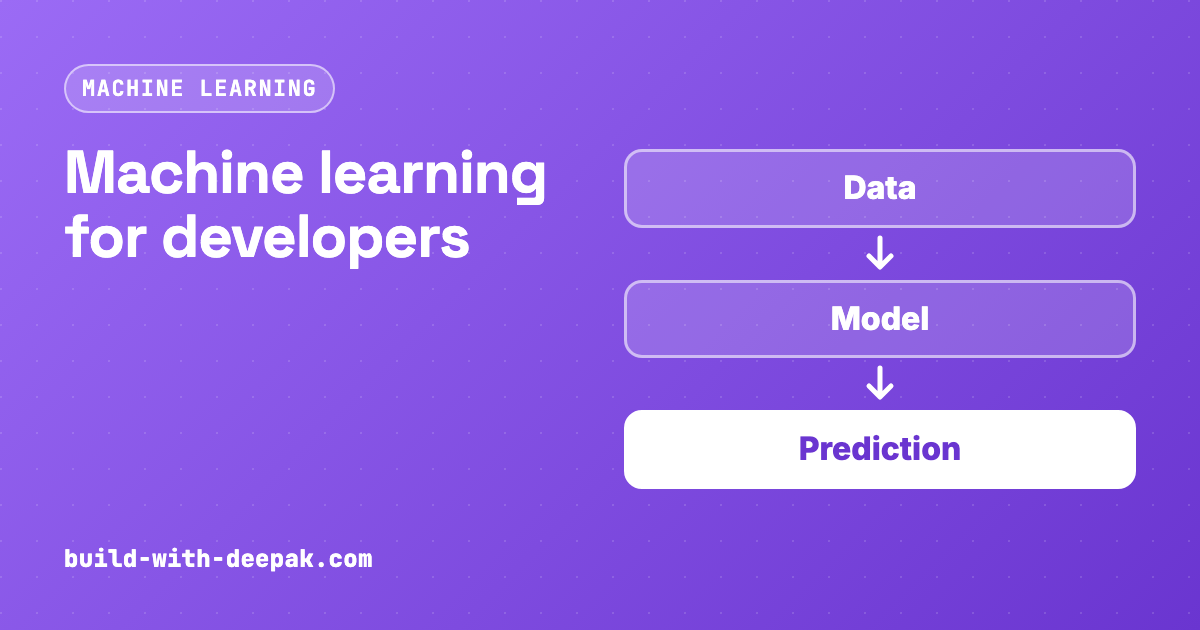
Machine Learning for Developers: Getting Started
A practical introduction to ML concepts every developer should know, with hands-on examples using TensorFlow.
Backend Architecture
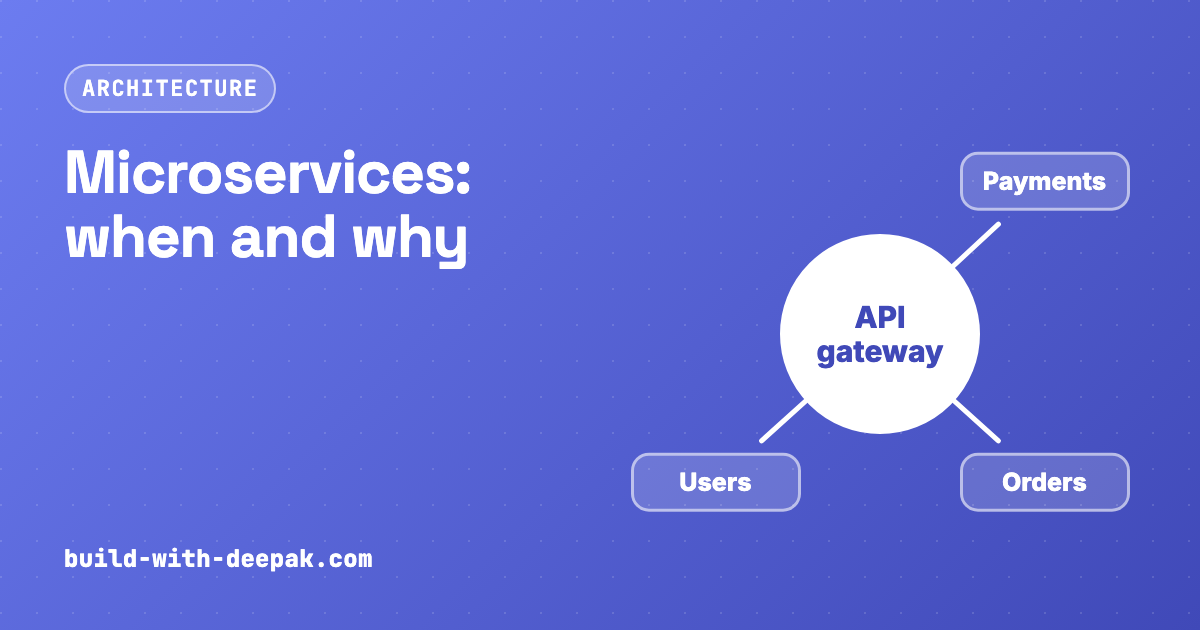
Microservices Architecture: When and Why
Understand when microservices make sense and when a monolith is the better choice for your project.
AI & Intelligent Systems
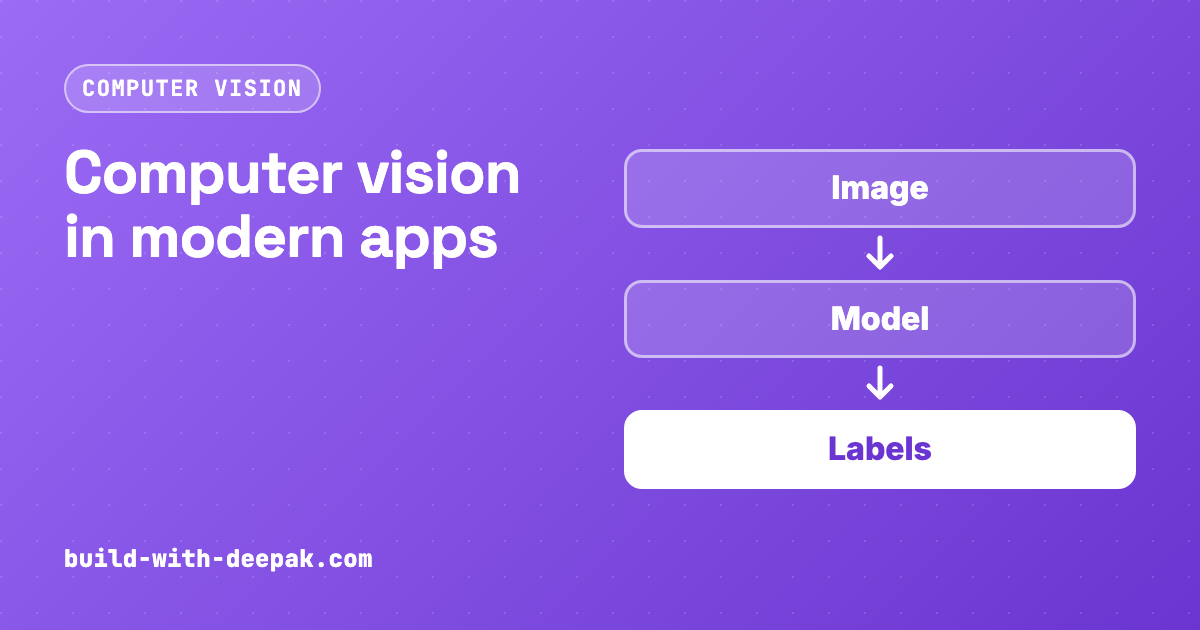
Computer Vision Applications in Modern Apps
Explore real-world applications of computer vision, from facial recognition to object detection in mobile apps.
AI & Intelligent Systems
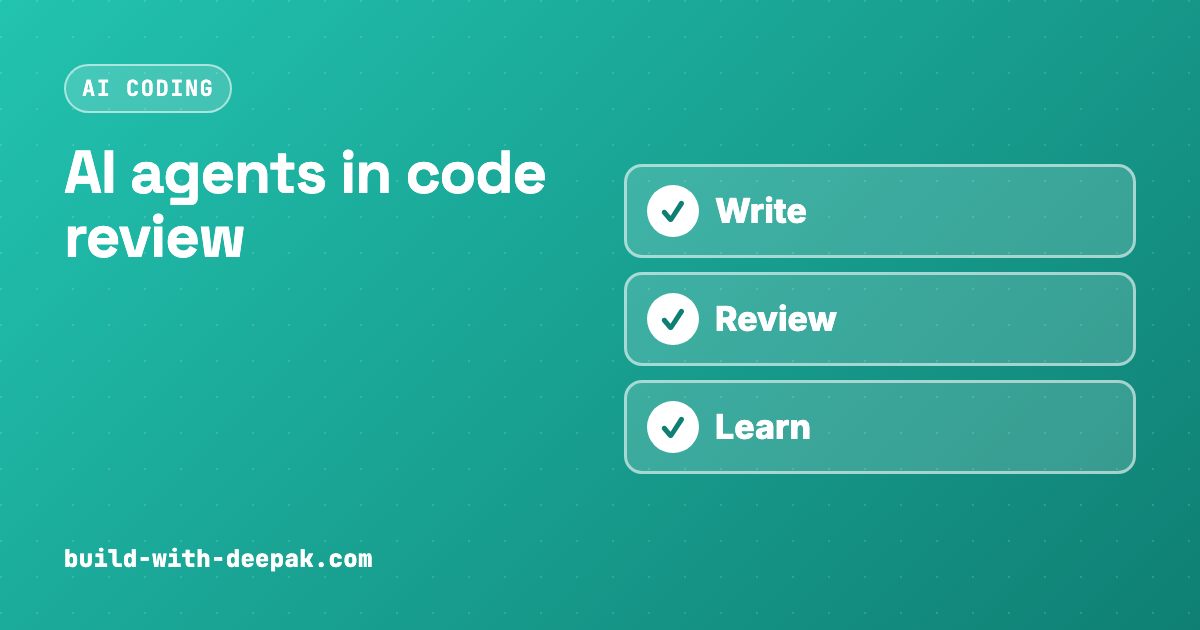
How Agentic AI (Copilot Agents) is Transforming the Way We Code & Review
The way we build software is changing fast. With Agentic AI and Copilot agents, developers now have intelligent partners that not only assist with writing code but also reviewing it for quality, performance, and security.
Security & Best Practices
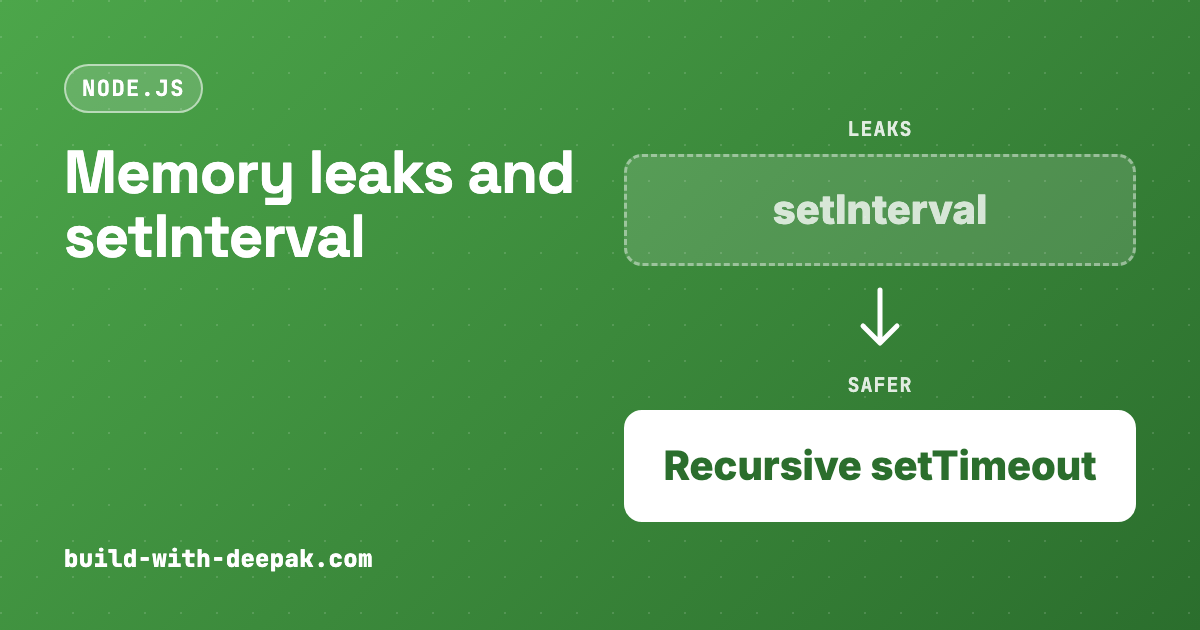
Avoiding Memory Leaks in Node.js: Why setInterval Can Be Dangerous and How to Fix It
Using setInterval for recurring calls in JavaScript might seem straightforward, but it comes with several pitfalls — especially in production systems or time-sensitive operations.
Frontend & Frameworks
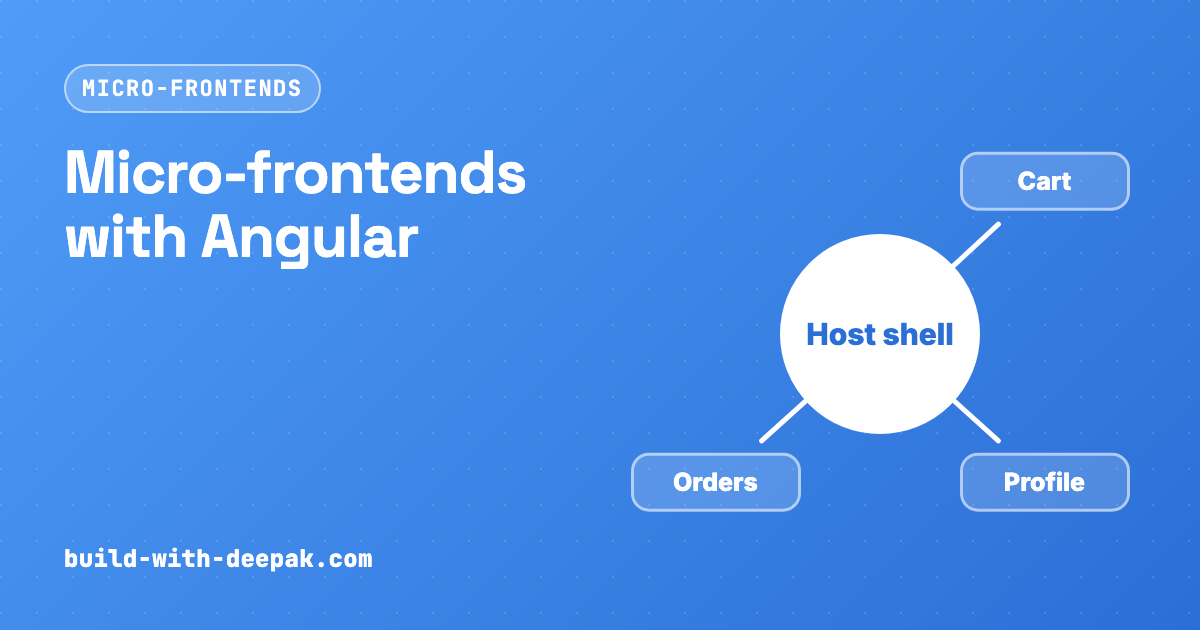
Micro Frontend: Application using Angular
MicroFrontends is an architectural style for building web applications by breaking them down into smaller, independent, and loosely coupled modules. Each module, or MicroFrontend, is developed and deployed independently, with its own set of dependencies, technologies, and teams.
Frontend & Frameworks
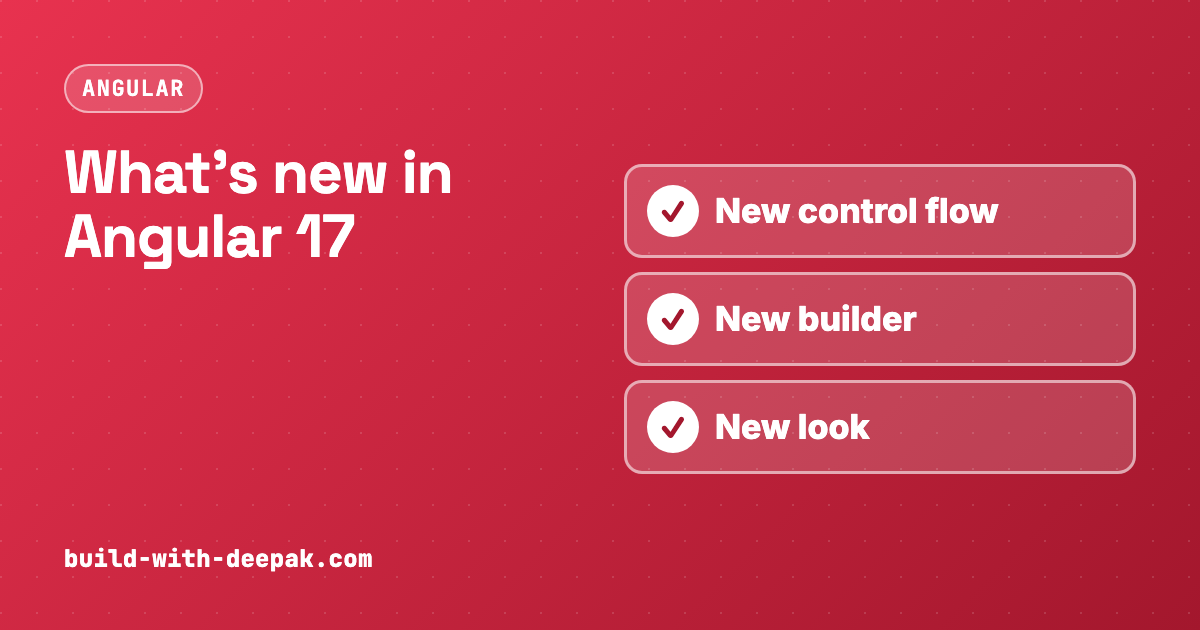
What's New in Angular 17
Angular version 17 was released recently, and this sounds like an hour of rebirth for the framework, which dates back to September 2016.
Security & Best Practices
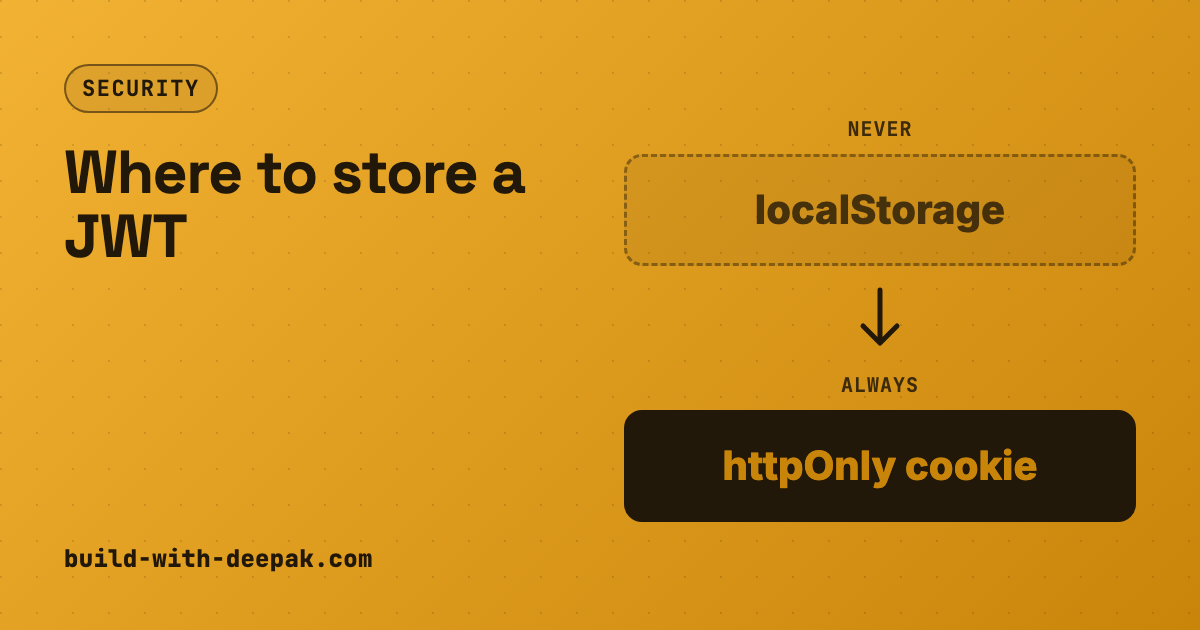
JWT Token — Where to Store JWT in Browser?
JSON Web Token (JWT) is an open standard (RFC 7519) that defines a compact and self-contained way for securely transmitting information between parties as a JSON object. This information can be verified and trusted because it is digitally signed.